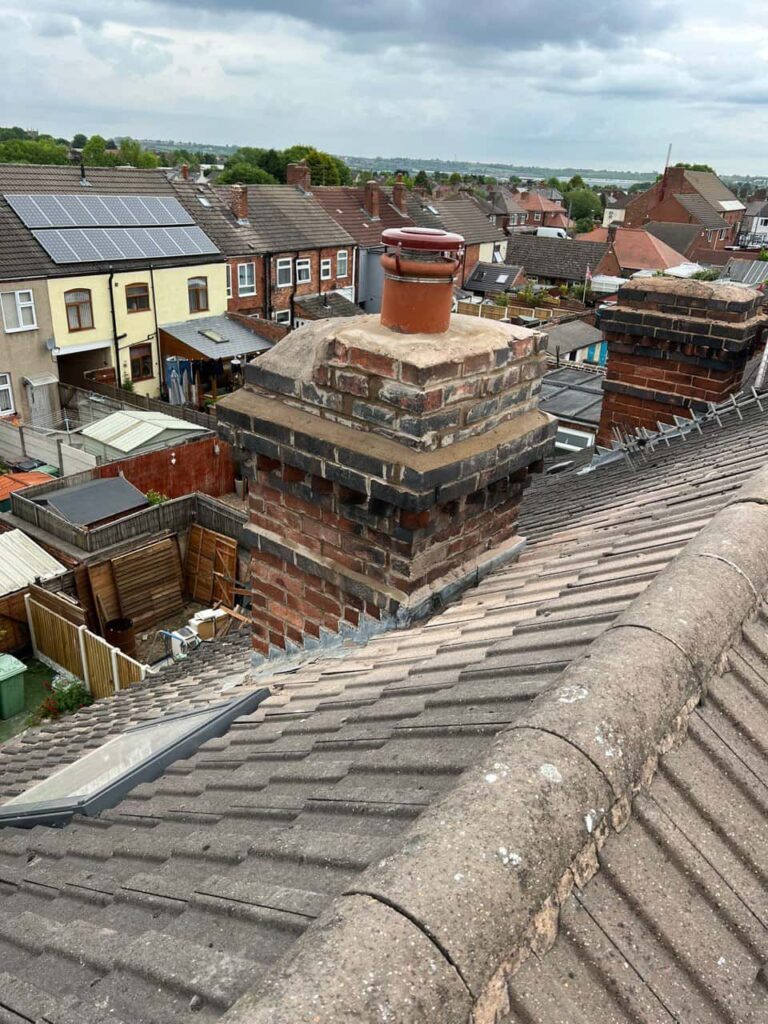
A damp patch on a ceiling may seem to reveal exactly where a roof is leaking. In reality, the visible stain often marks where water has finally entered the room—not where it first penetrated the roof covering.
Water can travel through several concealed areas before becoming noticeable indoors, making the true cause difficult to identify. For homeowners in Hurstpierpoint, West Sussex, a professional roof inspection can help trace this route and ensure that repairs address the underlying defect rather than only the visible symptoms.
Why Finding the Source of a Roof Leak Can Be Complicated
Locating a roof leak requires an understanding of how roofing materials, junctions and drainage details work together. A roofer must often assess the external covering and the accessible roof space before reaching a reliable diagnosis.
Water Can Travel Away From the Entry Point
Once rain enters beneath a tile, slate or flashing detail, gravity does not always take it directly downwards. Water may run along the underlay, battens, rafters or other surfaces before reaching a gap through which it can enter the property.
As a result, a ceiling stain may appear several feet from the original defect. Repairing the roof directly above the stain may therefore leave the actual entry point untouched.
Roofing Underlay Can Redirect Moisture
The underlay beneath tiles and slates provides an important secondary layer of protection. When it is intact, it can direct small amounts of water towards the eaves. If it is torn, brittle or incorrectly lapped, moisture may escape into the roof space at a distant point.
Because this layer is largely concealed, its condition cannot usually be determined through a simple ground-level inspection.
Roof Junctions Contain Several Possible Entry Points
Leaks commonly develop around chimneys, valleys, roof windows, vents and changes in roof pitch. These areas rely on several components working together, including flashing, mortar, seals and surrounding roof coverings.
A small defect in one detail can allow persistent water ingress, while the rest of the junction appears serviceable. Identifying the responsible component requires a careful inspection rather than a general application of sealant.
Wind-Driven Rain Can Behave Differently
Rain does not always fall vertically. During strong winds, it can be forced beneath slightly lifted tiles, through narrow gaps or against vulnerable junctions.
This explains why a roof may leak during one spell of bad weather but remain dry during lighter rainfall. Understanding the direction of the weather and the part of the roof exposed to it can provide important diagnostic information.
Small Defects Can Be Hard to See
A roof leak does not always involve an obviously missing tile. Fine cracks, loose fixings, slipped coverings and small separations in leadwork may be difficult to identify from below.
A tile can also look correctly positioned while being cracked beneath an overlap. Professional access allows the surrounding materials to be examined more closely.
Water May Enter Through More Than One Defect
An ageing or weathered roof can develop several vulnerable areas at once. One defect may be responsible for the main leak, while another allows smaller amounts of moisture to enter during particular conditions.
Repairing only the most visible fault may improve the problem without resolving it completely. This is one reason leaks sometimes appear to return after previous work.
The Leak May Only Appear Under Specific Conditions
Some leaks occur only during prolonged rainfall, when materials become saturated or water reaches a vulnerable overlap. Others depend on wind direction, the volume of rain or the way water flows across a particular roof slope.
Information about when the leak occurs can help a roofer narrow down the likely cause. Intermittent leaks should not be dismissed simply because the area later appears dry.
Internal Signs Do Not Always Show the Full Extent
Water may be present within the roof space before it reaches a finished ceiling. Damp insulation, stained timbers, wet underlay or marks around fixings can reveal a route that is invisible within the room below.
A loft inspection can therefore provide valuable evidence, particularly when completed during or soon after rainfall.
Why Guesswork Can Lead to Recurring Leaks
Treating a ceiling stain, applying sealant to a nearby junction or replacing a tile without confirming the entry point may provide only a temporary improvement. It can also make later diagnosis more difficult by disguising symptoms without correcting the defect.
An effective repair should be based on evidence from the roof covering, surrounding junctions and internal roof space.
How Professional Roofers Trace Difficult Leaks
A professional assessment typically considers:
- The location and pattern of internal staining
- The condition of accessible roof timbers and insulation
- Tiles, slates, fixings and underlay
- Valleys, ridges, verges and eaves
- Chimney and lead flashing details
- Roof windows, vents and other penetrations
- Drainage routes and signs of trapped water
- The weather conditions under which the leak occurs
Looking at these elements together allows the roofer to follow the likely path of the water and distinguish between the visible symptom and its true source.
Why the Correct Diagnosis Matters
Accurate diagnosis allows repairs to be matched to the problem. A cracked tile may require localised replacement, whereas deteriorated flashing, damaged underlay or defects across several areas may need a broader repair.
This targeted approach avoids unnecessary disturbance and reduces the likelihood of water continuing to enter through an overlooked weakness.
Conclusion
Roof leaks can be difficult to locate because water often travels away from its entry point, concealed materials redirect moisture and some defects appear only during particular weather conditions. The damp patch visible indoors may therefore provide only one part of the picture.
Hurstpierpoint Roofing Repairs can inspect the complete affected area, trace the likely route of water ingress and recommend an appropriate repair. If you have noticed a recurring leak or unexplained dampness at your property in Hurstpierpoint, West Sussex, contact the team to arrange a professional assessment.
Call us on: 01273 071 192
Click here to find out more about Hurstpierpoint Roofing Repairs
Click here to complete our contact form and see how we can help with your roofing needs.